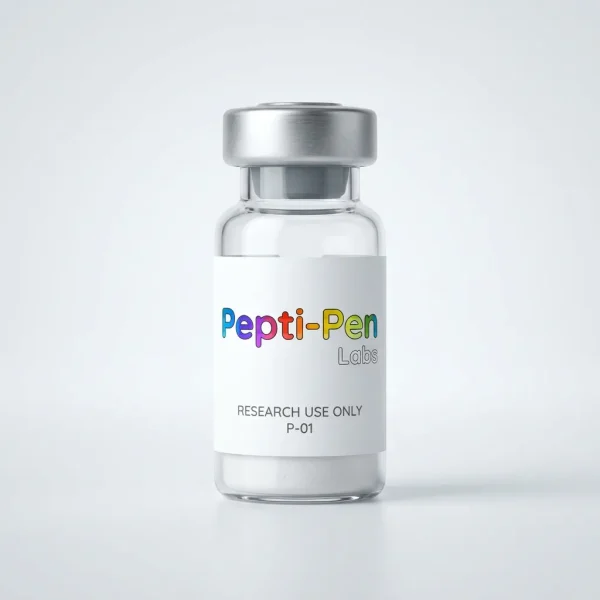
What It Is
NAD+ is an essential coenzyme found in every living cell, existing in its oxidized form. It acts as a critical electron acceptor in metabolic redox reactions and serves as an indispensable substrate for key cellular enzymes, including sirtuins (SIRT1-7) and poly(ADP-ribose) polymerases (PARPs).
What It Is Commonly Used For
-
Mitochondrial Energy Production: Studied for driving glycolytic, citric acid cycle (TCA), and oxidative phosphorylation pathways to generate adenosine triphosphate (ATP).
-
DNA Repair & Genomic Stability: Evaluated as a required co-substrate for PARP enzymes to recognize and repair single- and double-strand DNA damage.
-
Sirtuin Activation & Cellular Longevity: Researched for activating SIRT1 and SIRT3 deacetylases to regulate mitochondrial biogenesis, oxidative stress resistance, and gene expression during aging.
General Purpose
To provide a pure metabolic coenzyme for investigating cellular energy transfer, mitochondrial homeostasis, enzymatic DNA repair mechanisms, and sirtuin-mediated anti-aging signaling in laboratory research.
Specifications
| Property |
Details |
| Product Name |
NAD+ (Nicotinamide Adenine Dinucleotide) |
| Product Category |
Metabolic Coenzymes & Longevity Compounds |
| Compound Type |
Oxidized Pyridine Nucleotide Coenzyme |
| Primary Goal |
Mitochondrial ATP synthesis, PARP/Sirtuin pathway activation, and DNA repair research |
| Form |
Lyophilized powder / Liquid solution (vial) |
| Storage |
Store lyophilized powder at -20°C for long-term stability. Reconstituted solutions should be stored at 2°C to 8°C and protected from direct light. |
| Intended Use |
Laboratory Research Only |